
What More is There to Say?
Dear Leading Ladies,
You may be wondering why we haven’t said more about the recent murders of Renee Goode and Eric Pretti. We don’t really have a good reason except to say we couldn’t imagine what new words we could offer, in horror at the loathsome acts, or in memory of the decent people killed.
What more is there to say about a young man who devoted his life to caring for veterans in the intensive care unit of a veterans hospital? A man who could have been our brother or husband, son or grandson, whom we would have encouraged to stand up for his values and protest peacefully for fair, humane treatment of immigrants and all residents of this country.
What more is there to say about a young mother, who could have been our sister or wife, daughter or granddaughter, on her way home from dropping her youngest child at grade school?
And what more is there to say about an administration and a federal agency that tells bold-faced lies, professing that Pretti was brandishing a gun that was really a phone and that Goode was a domestic terrorist rather than a poet whose last words to the ICE agents were, “I’m not mad at you, dude”?
We thought we might honor Eric Pretti and Renee Goode by offering some advice on how to stay safe at protests. Organizations such as the American Civil Liberties Union (ACLU), the National Association for the Advancement of Colored People (NAACP), and the Human Rights Campaign (HRC) all offer detailed lists.
But the advice we read was hollow. The organizations advise protesters to dress comfortably, bring water, bring nothing illegal, avoid confrontation, stay calm and respectful. Reading through the advice, we were again confronted with the travesty of justice Goode and Pretti endured. They had done nothing wrong. They had followed the rules. Yet they were gunned down.
Instead of offering useful guidance, the lists seem to make a mockery of our new reality. Following the guidelines clearly guaranteed nothing for Pretti and Goode, or for many of us going forward.
So now what? Is the best way for us to honor Pretti and Goode to keep protesting, whatever the risks, even when our first impulse is to hug our loved ones and advise them to watch the news — that being well-informed is enough?
Last weekend, on the NPR radio program, “Codeswitch,” host BA Parker took on the topic of protests in American history and currently. Her guest was Professor Gloria J. Browne-Marshall, author of “A Protest History of the United States.” The professor credits protest with advancing major progress in our country, pointing to the eight-hour work day as the first and most significant protest achievement. Labor Movement protests, overall, created the template for successes to come, such as those during the Civil Rights Movement.
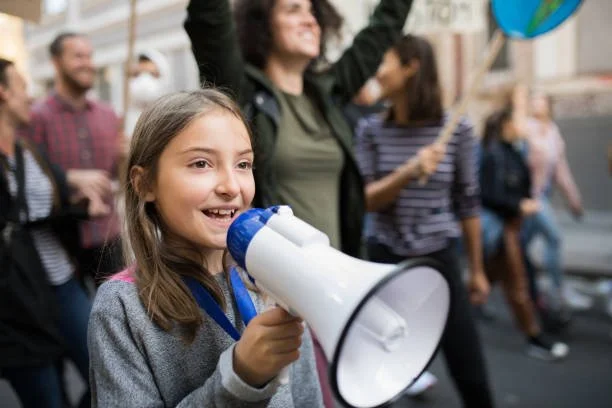
Browne-Marshall believes the history of protests that shaped our society could — and should — inform today’s protesters. Instead, much of that work seems “dismissed from history.” She sees that as part of the reason more young people in high school and college are not as engaged, as they were during the Civil Rights Movement or the protests against the war in Vietnam. Young people were on the front lines for those protests in the fifties and sixties. Now, they don’t know about the successes that came out of that period, Browne-Marshall maintains. They only see the current backsliding after a few successes. “They deserve to be cynical,” she says. They need to see protest as a source of empowerment and a way of “being part of something bigger than themselves.”
To expect protests to work immediately is misguided, Browne-Marshall contends. More frequently, with any cause, there are two steps forward and one back. When a major accomplishment follows a protest, it is probably the result of many protests that came before. People want what Browne-Marshall calls the TV version, but the true story of social change and protest has always involved people taking risks as well as losing jobs and homes and lives.
Whatever the cause, be it better housing, education, healthcare, or voting rights, no single issue will affect every protestor and not everyone who is affected will choose to protest. Browne-Marshall points accusingly to those she calls Freedom Freeloaders, those who want to reap the benefits of what protest helps achieve without putting themselves on the line. It’s always been that way, she says.
Browne-Marshall also thinks it’s important to recognize the broader definition of protest. “It can be the single act of not shopping at a certain store,” she said. “You don’t have to be out in the street.” She offered the examples of Rosa Parks taking her seat in the whites-only section of the bus and the ensuing bus boycott as acts of protest. Providing food and other necessities for those who feel unsafe leaving their homes for work or school is another way to protest the recent assaults on democracy, as is donating funds for legal and housing costs.
Despite the fact that the goals of protesters are too often thwarted; despite the lack of strategy in today’s protests that Browne-Marshall bemoans; despite the fact that we have a complicated relationship with liberty given that we live on land stolen from indigenous people and with those kidnapped from Africa; and despite the fact that our first law limiting immigration/naturalization was passed just after the Revolutionary War, Browne-Marshall concludes that progress requires we not be dissuaded by the steps backward if we are to go forward at all.
So in Mr. Pretti’s and Ms. Goode’s memory, we encourage you — and ourselves — to commit to whatever acts of protest we can. Remember, wearing a shirt or hat can spark thought or dialogue. And it’s not too early to find the nearest No Kings rally planned for March 28 (Nokings.org). Try to bring a young person with you!
Speaking of young people, next week we are reaching out to art teachers at area high schools to invite their students to participate in our 2026 Art as Activism contest. This year, students are asked to design t-shirts that will encourage people to vote in November. If you know some students who might like to participate and whose schools may not be on our list, send them our way or send their contact information.
None of us is too old or too young to do something meaningful for justice. While we plan on continuing to show up, we really like the idea of sharing our experiences with some youngsters and bringing them along on March 28 and to other gatherings. That said, we will be gauging our risks as we make our decisions.
As always, we’d like to hear your thoughts.
Therese (she/her/hers)
Judy (she/her/hers)
Didi (she/her/hers)
Leading Ladies Executive Team
Leadingladiesvote.org
ladies@leadingladiesvote.org