
Stormy Weather
Dear Leading Ladies,
We are waiting for the first flakes to fall in New England, the next stop for what promises to be the storm of the century, at least so far. We are checking the batteries in our flashlights and collecting the leftover candles from the holidays. We’re charging our phones and iPads and making sure we have logs for fireplaces and propane for inserts. We’re shopping for food that will keep through a power outage, sometimes forgoing our favorite and most economical stores for less popular places where the cash register lines aren’t ten carts deep.
We are turning on the radio and television, and checking our phones for the latest predictions. The meteorologists haven’t been this excited since they got their first chemistry sets in third grade. Eighteen-plus inches of snow with sleet and freezing air to follow, oh my! And the charts! Goodness, aren’t they pretty with their color coding and live updates!?! When we’re not taking in the predictions and counting our supplies, we hear the pleas to check on our neighbors, especially the elderly, and we have to reckon with the reality that we are the elderly.
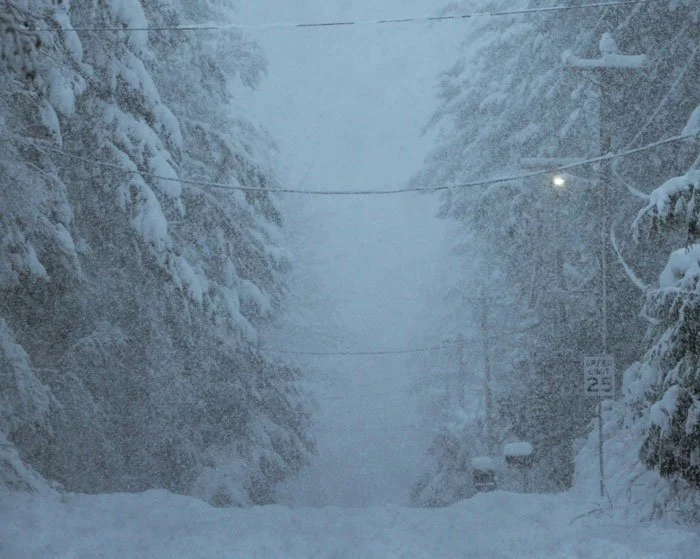
Photo by Taylor Prince on Unsplash
But, with all the information we’re getting, what’s missing?
Where are the stories explaining how this “historic” and “monster” storm — due to affect two-thirds of the country and more than 200 million people — confirms the reality of climate change rather than disputes it. If it is true that climate change is real, which we believe, and if it is true that this storm is part and parcel of that change, why aren’t our legislators, as well as climate scientists and their research institutions demanding airtime and print space, grabbing the microphone to make their case? The storm certainly has everyone’s attention, so now is a perfect time to give us all a quick lesson in climatology and its relationship to the big storm of ‘26.
When we looked at recent coverage, this is all we found.
On CNN Climate, a recent article explained that the current storm is likely the product of our increasingly warm winters. It isn’t until paragraph eight that the article gives any explanation. Quoting Jennifer Francis, a researcher at the Woodwell Climate Research Center, “Even though global warming is causing warmer winters overall, severe winter events are still possible — and perhaps even more likely — because warming is not the only consequence of human-caused climate change.” The article proceeds to explain the role of the polar vortex and how it is stretching due to sea ice loss from human-caused climate change, according to Judah Cohen, a research scientist at MIT. “There’s clearly this strong relationship between stretch vortex events and extreme winter weather here in the US,” Cohen said. “I’m not saying any one weather event is attributed to climate change, but I do think it loaded the dice here.”
Talk about burning the lede!
CBS News began with Trump’s assertion that the storm proves that global warming does not exist. Fortunately, by paragraph three, the article pivots and states, “Climate scientists say Mr. Trump’s statement conflates short-term weather trends with long-term climate changes.” Describing the difference between a weather event and our warming climate, the article goes on to quote Dr. Steve Decker, director of the undergraduate meteorology program at Rutgers University. “The unusually cold air spilling into the United States is an example of weather while climate is an average of temperatures across the world over time that shows warm areas outweighing cold ones, according to Dr. Decker. This distinction is important but initially hard to grasp.
Further on, the CBS article quotes several other experts explaining the role of the warmer air weakening the polar vortex and being a likely player in causing events such as the current storm. Getting to this explanation took long enough.
The New York Times did the best job of explaining the storm’s relationship to climate change. In a very short article, Eric Niiler at least led with an explanation of the polar vortex, though the headline, “Is climate change weakening the polar vortex?,” could have drawn readers in more with a reference to the storm. Niiler explains that “A mass of cold Arctic air is colliding with a warm, moist high-pressure system moving west from California, producing a sprawling area of freezing rain…” He, too, refers to Judah Cohen’s finding that the stretching of the polar vortex is “linked to increased severe winter weather in the United States in the past decade.”
Our point? If climate change, like many other important issues, is going to grab public attention and support, it needs to be upfront and visible to all voters. How many ways can legislators and scientists, civic and thought leaders, keep shooting themselves in the foot by talking above their audiences or not talking at all about an issue that should be nonpartisan?
All experts should sharpen their language and beg for airtime to explain how this storm relates to climate change. The storm of the century is a perfect time to show American voters how this storm happened and what we still can do to save the planet. And, by the way, the media should skip the eye-catching headlines about Trump’s latest lies and give us the facts in digestible form. We deserve no less.
Therese (she/her/hers)
Judy (she/her/hers)
Didi (she/her/hers)
Leading Ladies Executive Team
Leadingladiesvote.org
ladies@leadingladiesvote.org