
It’s Worth Repeating: We Get What We Vote For
Dear Leading Ladies,
Dolly Parton died last week and nobody can stop talking about her. Why is that? Maybe because she defied all stereotypes and was unabashedly herself. Maybe because that self was an incomparable songwriting talent with a killer voice and a genius for business who created a nationwide literacy program for very young children. Maybe because she was a philanthropist and a champion for the LGBT+ community. And maybe it’s also because she did all that after growing up as one of twelve children in a two-room cabin. We love a rags to riches story with a real heroine who breaks through barriers we can only imagine.
I saw Dolly Parton in person once. My neighbor, a big fan, convinced me to go with her to Lowell Auditorium to sit in close to the very last row to see this little bit of a woman take the stage and own it, for what seemed like far more than two hours. Even though we were as far away as we could possibly get from Dolly, she seemed to be singing just to us, and having a darn good time doing it.
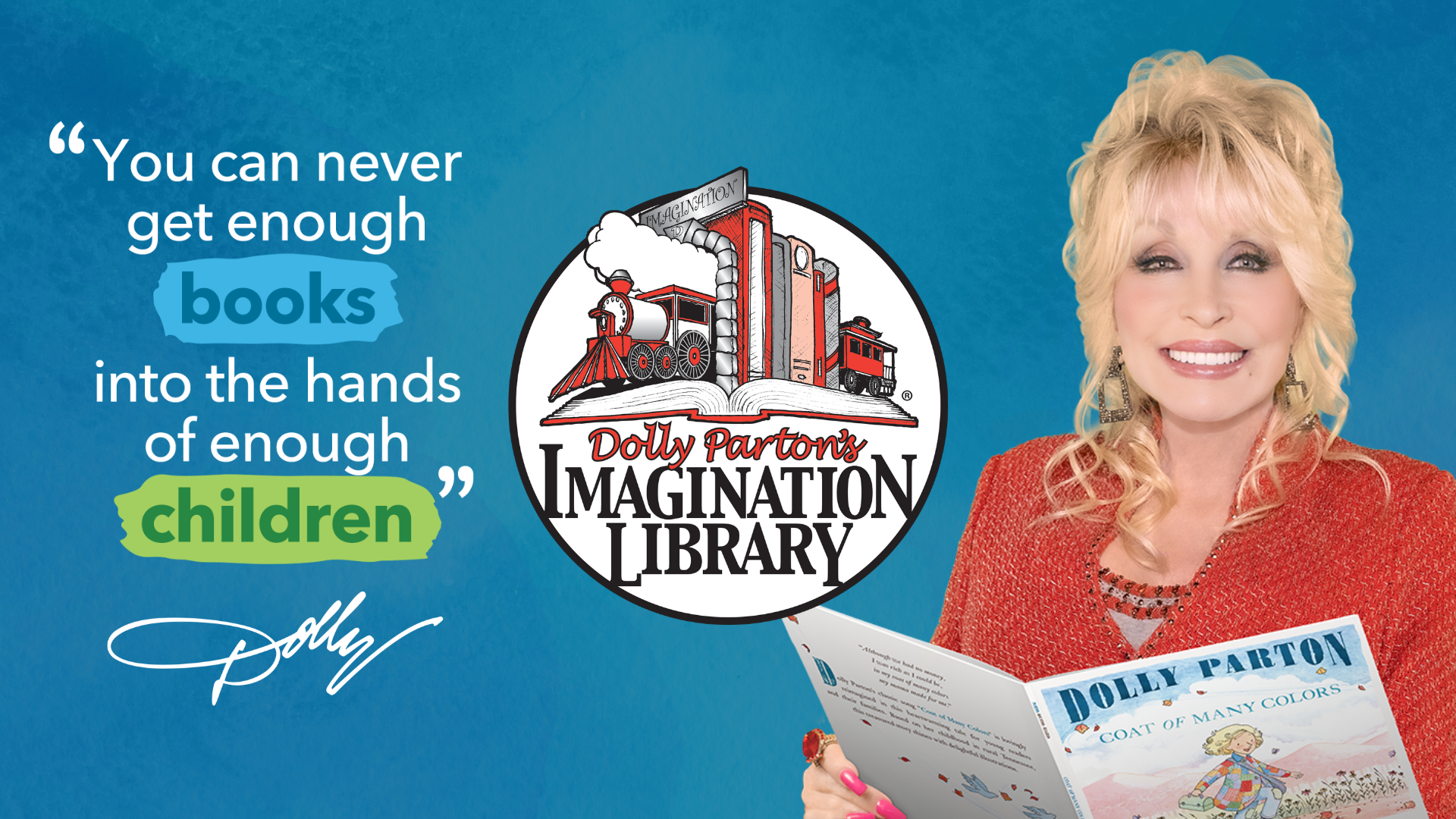
Credit: imaginationlibrary.com
So, what does Dolly Parton have to do with our elections?
Well, she certainly was one extraordinary leading lady and we want to invoke her spirit to inspire us to do everything we can to bring about change. Change for good. And right now, that means helping to get out the vote on November 3.
Yesterday, we witnessed primaries in many states, including our own Commonwealth of Massachusetts. As a result, both strong MAGA supporters and Republican Trump dissenters will face Democratic opponents in November. Some of the Democratic candidates in these mid-terms will be traditional party Democrats, while others self-identify as more progressive and even Democratic Socialists.
What has become clear is that there are schisms in both parties.
The challenge for both will be to convince their members that their commonalities outweigh their differences.
In the past, the Republicans have achieved this goal by emphasizing that, whoever the candidate, the party always stands for fiscal conservatism, a hardline on immigration, tax favoritism for the rich, limited social programs for the poor, and states’ rights.
For the Democrats, it’s always seemed a little tougher. Losing their followers to the Republicans is not the problem so much as the threat of having them not vote or throwing away their votes to fringe parties or write-in candidates. There is a decline in Democratic voter registration, for one thing. And there is, in fact, a disconnect between some younger, more progressive voices, and some older, more traditional voices. Moreover, while the Dems have historically been the voice for working people, in recent years working people have felt less heard and represented by Dems. This is particularly confusing since in times of rising costs, working class people usually turn away from the ruling party. And this is certainly a time of rising costs, despite what the administration says.
To win the contests necessary to secure majorities in the House and Senate, both parties have their work cut out for them. The Republican candidates are playing a game where the rules can change at any moment, and thus their odds of winning. In order to get an endorsement and money from Trump, Republican candidates will have to express and display loyalty and fealty, which could offend some Republican voters.
The Democrats have different challenges. They have to unite their members under the values brought forward by presidents like FDR and LBJ and Abraham Lincoln, reaching out to working men and women and proving the party is fighting for them. For health care and insurance. For quality, public education. For paths to home ownership. For pay they can live on.
Like we said last week, we get what we vote for. Let’s make sure no one we know stays home from the polls or throws away their vote. These mid-term elections are just too important. Read about the candidates here. Who stands for what matters to you. Discuss with friends and family. We can’t afford to be complacent.
As for Dolly, she refused to endorse a candidate or political party, because she felt it was inappropriate as an entertainer to do so. Admittedly, she believed that taking a political stand would also risk losing half her audience. That said, she was very vocal in her support of gay rights and gender equality, and against racism and police violence. Clearly, she chose her own form of activism, as she did in all her choices in life. With the vast platform she built, her actions, no doubt, had impact.
Most of us have small platforms. But together, we, too, can make a difference.
Therese (she/her/hers)
Judy (she/her/hers)
Didi (she/her/hers)
Leading Ladies Executive Team
Leadingladiesvote.org
ladies@leadingladiesvote.org