
Fight Stupidity With Knowledge
Dear Leading Ladies,
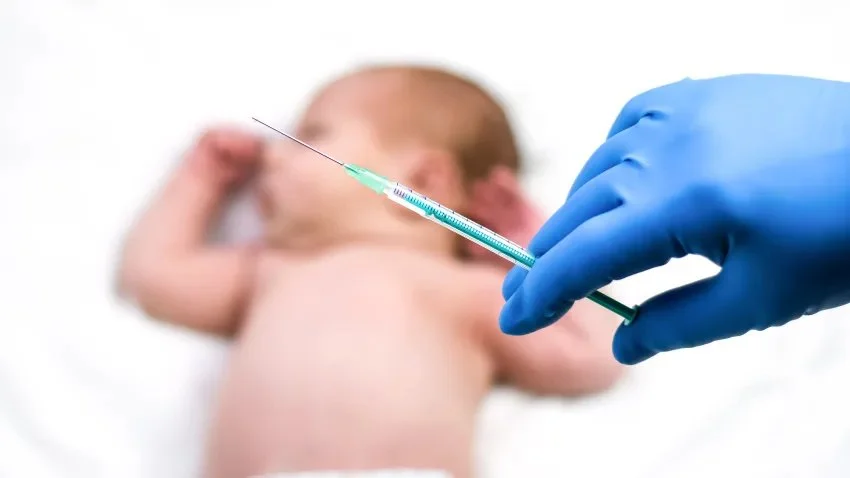
He said he’d do it and he did. Last week, U.S. Secretary of Health Robert F. Kennedy Jr. succeeded in his efforts to have the federal vaccine advisory panel, with all its members appointed by him, vote to drop the recommendation that children should get vaccinated for Hepatitis B at birth.
His reasons? He believes the occurrence of Hep B in infants is rare and the risk of toxicity to the brain from the vaccine, including the possibility of autism, is not worth it.
We wanted to understand a bit more about Hep B and its dangers to infants, both immediate and long-term, so that we could share our knowledge with those who might be questioning RFK Jr’s arguments.
iStock
First, a little history.
Hepatitis B is a prehistoric disease, dating back 82 million years. “Today, scientists have finally mapped out the virus and its dissemination pattern, starting from that date 82 million years ago,” writes Passport Health. “According to a recent study, ‘strands of Hepatitis B started in North Africa and the Middle East before spreading to the rest of the world.’”
Because Hep B is still so active in other areas of the world where vaccinations are not widely available, U.S. travelers to certain countries are advised to be vaccinated if they were not at birth.
What is Hepatitis B?
According to the Cleveland Clinic, “Hepatitis B is a viral infection that damages your liver. You can catch it if you’re exposed to infected bodily fluids,” such as amniotic fluid, blood, semen and saliva. There is no cure but treatment can make the virus inactive so that it is no longer contagious. Being infected brings the very real danger of cirrhosis of the liver, liver cancer, and liver failure.
Who gets Hepatitis B today?
As reported in Passport Health, “According to the WHO, approximately 257 million people in the world are currently living with the Hepatitis B infection. Each year, approximately 620,000 people die from the disease. The risk for Hepatitis B remains the highest in Africa and the Western Pacific.” The CDC estimates that approximately 14,000 people in the U.S. have acute Hepatitis and some 640,000 people in the U.S. have chronic Hepatitis B.
Depending on the individual, Hepatitis B can be short-lived (Acute) or become a long-term infection (Chronic). The infection can affect the liver, leading to far more serious problems like liver cancer and cirrhosis.”
Why vaccinate at birth?
As the Cleveland Clinic explains, you can get Hepatitis B by exposure to bodily fluids from someone who has the virus. “This can happen if you
Share needles or syringes with someone who has the virus
Have unprotected sex with someone who has it
Get stuck with a contaminated medical instrument like a scalpel”
It can also happen to an infant whose mother is infected. And infants who are infected have a 90% chance of having a lifelong infection.
Okay, it’s easy to see how someone might say, “I don’t share needles or syringes, have unprotected sex, or get medical treatment from some cowboy who’s going to stick me with an instrument in the OR I don’t expect to visit. So why should my baby need a vaccination?!?! “
There’s more to the story
“Newborns, infants, and young children,” as reported by the Johns Hopkins Bloomberg School of Public Health, “are particularly susceptible to Hepatitis B and more likely than teens and adults to develop chronic infection that leads to life-threatening complications, including cirrhosis and liver cancer. And of those who develop chronic Hepatitis B infection, 15%–25% will die from the disease.”
Dr. Paul Offit, who directs the Vaccine Education Center at Children's Hospital of Philadelphia, explained recently on PBS that in 1991, “the recommendation [by the CDC and American Academy of Pediatrics] was to have a birth dose for all babies, babies whose mothers had Hepatitis B infection or babies whose mothers didn't have Hepatitis B infection, because, at the time, 30,000 children less than 10 years of age had Hepatitis B.”
He further explained: “Half of them got it from their mothers. The other half didn't. The other half got it from relatively casual contact with someone who had chronic Hepatitis B. And there were millions of people in this country then and millions of people in this country now who have chronic Hepatitis B.”
Hep B can be transmitted casually, Dr. Offit emphasized. “I mean, if you live in that home or if you share any sort of common things like toothbrushes or washcloths or towels or nail clippers, you can get Hepatitis B; 15,000 children got Hepatitis B, not from their mothers.”
And with the 1991 recommendation, Dr. Offit concluded, “we virtually eliminated this disease in children less than 10 years of age.”
Virtually eliminated. That’s amazing. Couple that fact with the reality that there is no reliable scientific evidence that the vaccine has any relationship to the incidence of autism. We then all know the truth that we need to spread.
Parents can still request the vaccine. Doctors can still recommend it. But will insurance companies cover the costs? As of Sunday, CNN and other news outlets were reporting that coverage would remain the same for the vaccines. That’s a big relief, but we’ll still keep an eye on that ball.
We are planning to spread the word on social media encouraging new moms to have their babies vaccinated. Please share and like what we post!
Let’s keep our young ones safe.
Therese (she/her/hers)
Judy (she/her/hers)
Didi (she/her/hers)
Leading Ladies Executive Team