
What’s it Like for You to Walk Into Saks
Dear Leading Ladies,
Several years ago, I watched a young Black student at a local high school deliver “A Poem for My White Friends/ I Didn’t Tell You” to an audience of her mostly white peers. I was so moved that I asked the girl to forward me the poem and I have kept it in my computer ever since. I came upon it a few days ago, and decided it was a perfect read to share as we approached Martin Luther King Jr. Day and the Black History Month, both in jeopardy of cancellation by the present federal administration.
The poem, first published in 2013, is the work of Norma Johnson, an artist, educator, spiritualist, and warrior for social justice. “This poem was a cry from my heart to speak on a deeper level to my white friends, she wrote, “and to attempt to relay to them that because of race, there is a palpable difference in the way our daily lives play out. And to my friends of darker hues, I offer this gift of voice.”
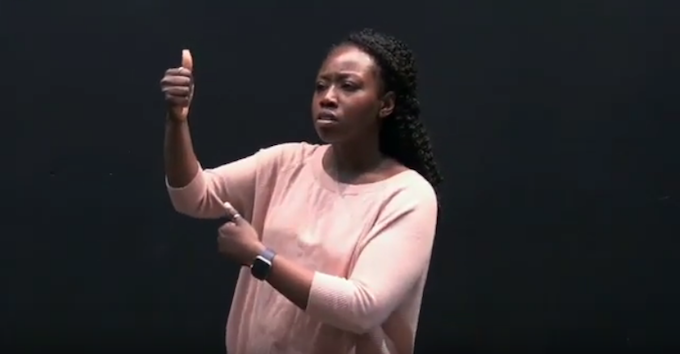
Norma Johnson performing A Poem for My White Friends (All in spirit.com)
A poem for my white friends
by Norma Johnson
I Didn’t Tell You
I didn’t tell you about my real life
The one that haunts me most days
It comes in moments at a time
Triggered by a look,
an attitude,
a sensing of superiority,
of blatant ignorance,
of good meaning intention
dripping crap down my face.
I didn’t tell you about the look they gave me when I opened my door and they saw black me standing there, their mouths agape, their thoughts running loudly through my head.
I didn’t tell you about being followed through the store and how I obediently kept my hands and my bag in plain sight.
I didn’t tell you how quickly they look away when I catch them staring at me in the restaurant and standing in the supermarket line.
I didn’t tell you how the clerk pretended the white woman had been standing at the counter before I had and waited on her first.
I didn’t tell you how I have to take a really deep long breath every time before I walk into a room full of white people.
I didn’t tell you that in the meeting, the classroom, and the workshop, when the subject of diversity comes up, they all look at me as if I am the spokesperson for the whole nation of people of color.
I didn’t tell you that when diversity isn’t mentioned and needs to be, I’m too often the one who has to point it out.
I didn’t tell you how many times white people say to me in one way or another, “you’re different,” because they felt comfortable with me and that didn’t fit their mold of what they figured a black person was like. I
I didn’t tell you how disappointed that white man was, when after eagerly questioning me, found out that I was not the exotic nubian he had fantasized, but just another negro girl from new jersey.
I didn’t tell you about the white woman, a stranger who chose out of all the white people around us, to sit next to me and proceed to tell me all about her favorite black performers and her black friends and how this country needs to take integration to the next level so I could see how her life is an example of that.
I didn’t tell you about the anger I stuffed down when that dreadlocked young white boy gave me a high five and called me “sistah.”
I didn’t tell you about the white woman I passed at twilight in the park, who tensed her body, tightened her grip on her purse and walked a large curved detour past me.
I didn’t tell you that my stomach clenches when I see a police car because it means I may not...be...safe.
I didn’t tell you that your world is not mine and that we are virtual worlds apart.
I didn’t tell you that while you can somehow think of yourself as multi-ethnically expansive because you have a black friend, I meanwhile just still... stay... black.
I didn’t tell you that while you can walk boldly into any place you choose, I always have to consider where I am, who I’m with, and how I’m going to affect people.
I didn’t tell you how your liberalism chokes me sometimes as you sit in judgment of someone you don’t even know.
I didn’t tell you that being a good person and being clueless can come in the same package.
I didn’t tell you about the comments you made that would take a lifetime of explaining how you’ve bought into the system that keeps us ALL, ...in...our...place.
I didn’t tell you about my day because I had been taught not to.
And you have been taught not to even consider it.
I didn’t tell you about my day because then I would have to live it all over again ...
And I have to save that... for tomorrow.
(You can view Johnson perform the poem here)
Johnson wrote the poem when many of us were first grappling with the realities of white privilege, white supremacy, unconscious bias, unequal access to education, housing, and medical care. We know more now, but the poem, more than a decade old, brings up problems that are still very real and part of the daily experience of far too many people. As more and more exclusionary practices are legislated, and more and more people are “othered” in speech and action, Johnson’s poem to her white friends will continue to reflect the everyday experiences of a significant number of Americans. This stinging reality could not have been made more clear than by the story reported by Erica L. Green in Sunday’s New York Times that began, “President Trump said in an interview that he believes civil rights-era protections resulted in white people ‘being very badly treated’, his strongest indication that the concept of ‘reverse discrimination’ is driving his crusade against diversity policies.”
As Heather Cox Richardson reminded us last week, we need to continue to work locally for change. That can mean protesting, attending school committee meetings, or volunteering at soup kitchens. But it can also mean educating ourselves more about what life is like for those around us and practicing empathy and kindness.
We can do that.
Therese (she/her/hers)
Judy (she/her/hers)
Didi (she/her/hers)
Leading Ladies Executive Team
Leadingladiesvote.org
ladies@leadingladiesvote.org