
Guest Letter by Sara Stanley
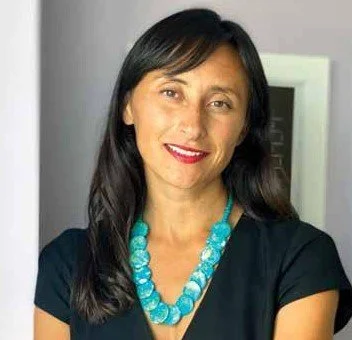
This week, we are pleased to share a letter adapted from a speech given recently by Sara Stanley, executive director of HAWC (Healing Abuse, Working for Change), at the organization’s annual fundraising breakfast. She describes a HAWC initiative to prevent abuse through an educational program in local schools. At the event, Leading Ladies Founder and Co-director Therese Melden was presented with the Dale Orlando Memorial Award for her decades of work in the community and for HAWC.
Dear Leading Ladies,
The late great Dolly Parton said, “If you don’t like the road you are walking, pave a different one.” Here at HAWC, we are taking that advice to heart.
Many of you have seen the recent news about what’s being called the Cornell 7. The details of that sexual assault are harrowing. And outrageously, they are part of a long history, one many survivors in this room know too well, of victims being ignored, while the futures of the people who committed violence are treated as more important than the person they harmed.
It is easy to categorize those young men as monsters. It’s almost comforting, because monsters aren’t like us. They’re not like our friends, our sons, or our students.
But the more honest question is this: what kind of culture made those young men feel entitled to commit violence against another human being? And what does it say that the adults in charge, who validated that belief, treated them as entitled to continue their education unhindered by serious consequences?
Entitlement is taught, in historical systems of oppression, in rigid gender norms of what men should be like and what women should be like, in the jokes we let slide, in the group chats, in every moment a young person watches an adult look the other way. But if entitlement can be learned, so can respect.
Here is what we know at HAWC. Abuse and violence are learned patterns of behavior. And patterns can be interrupted before they take hold.
It would be easy to be dismayed, overwhelmed, isolate ourselves and confine our action to doom scrolling through social media. But at HAWC, we audaciously choose to pave a different road.
That road runs through our classrooms. Last year, many of you invested in our newly prioritized prevention education program. Here’s what your investment started: in fall 2025, HAWC outreached to more than 60 schools, with nearly half expressing interest in partnering with us. By the end of the academic year, we engaged more than 2,500 young people, 330 caregivers, and 400 educators. Those numbers are proof of how deep the need is, and proof of how ready our community is for upstream work, the work of stopping violence before it ever starts.
This past June, the Commonwealth of MA recognized that approach as well. HAWC was selected for a highly competitive program with the Massachusetts Department of Mental Health, as one of just ten programs statewide to work with the Office of Behavioral Health Promotion and Prevention to scale our education program and reduce intimate partner violence through upstream public health efforts.
They validated our strategy: helping young people build healthy friendships and strong social-emotional skills, because before anyone has a first date,they have a first friend. And we tailor our curriculum to each school and its Students.
Through this work, we are going to close a critical gap. Neurodivergent students face increased risk and vulnerability, and until now, prevention programming has largely not taken their needs into account. HAWC is going to change that.
We’re also expanding who we reach. Alongside our work on college campuses, high schools, and middle schools, we will begin developing programming for children in fifth and sixth grade. The earlier lessons about kindness, boundaries, and respect start, the stronger the foundation. While we work to build the future we want, we must also attend to those at risk today. HAWC’s work cannot be all prevention or all crisis response. They are two halves of the same urgent work, and we do both. For nearly 50 years, across 23 Essex County communities, HAWC has provided free, confidential services to survivors. Leaving an abusive relationship rarely involves a single decision or a single need. So our support begins with a 24-hour hotline that never takes a night off, and it continues through emergency shelter, housing assistance, legal advocacy and representation, support groups, and services for children. Crisis intervention keeps survivors alive and safe today. Prevention shrinks the number of survivors who will ever need that hotline call tomorrow.
Both are urgent and necessary.
Every one of us has walked a road we didn’t like. Some of us have walked it as survivors. Some have walked it beside someone we love. Some of us have walked it by reading the news and feeling that familiar ache of “not again.” But here’s what I know. Domestic abuse is not inevitable. And neither is its enormous cost, to our families, our schools, our public systems, and our communities.
So let’s get to work, and let’s pave another road. Together.
Sara Stanley